The Architecture of Protection in British Mobile Applications for Real-Time Poker and Horse Racing Betting
Finley Butler · Aug 18, 2026

The Architecture of Protection in British Mobile Applications for Real-Time Poker and Horse Racing Betting
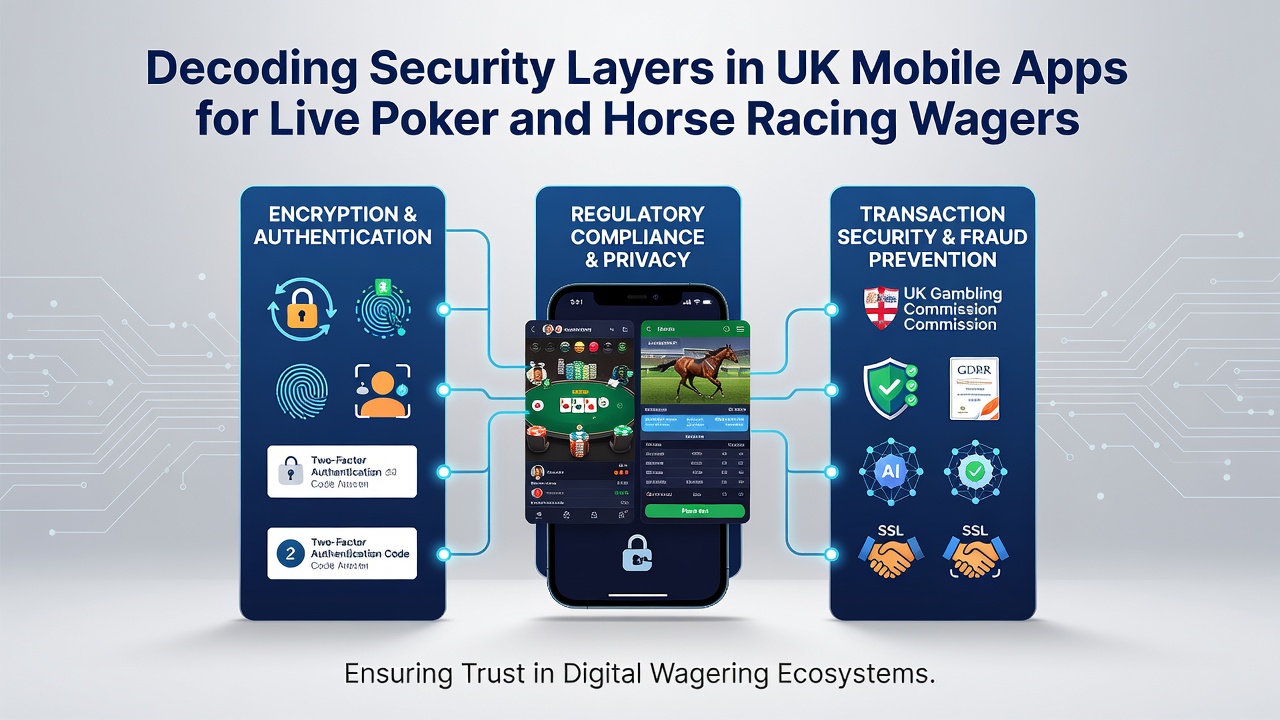
Security protocols in United Kingdom mobile applications handling live poker and horse racing wagers rely on multiple integrated layers that address encryption, user verification, and transaction monitoring, while developers continue to refine these systems as digital wagering expands. Applications process sensitive financial data alongside real-time game outcomes, which requires coordinated defenses that adapt to evolving threats. Researchers have documented how these frameworks combine standard cryptographic tools with platform-specific features to maintain integrity across both poker tables and racing markets.
Core Encryption Practices in Wagering Platforms
Developers implement Advanced Encryption Standard algorithms alongside Transport Layer Security protocols to secure data transmission between user devices and central servers, and these measures extend to stored information on mobile handsets. Applications encrypt betting histories and account details at rest using 256-bit keys, which reduces exposure if a device is compromised. Observers note that live poker sessions demand continuous encryption streams because players exchange cards and bets in real time, whereas horse racing apps focus similar resources on odds updates and settlement processes that occur after each race concludes.
Authentication and Access Controls
Two-factor authentication serves as a baseline requirement in most platforms, and many now incorporate biometric options such as fingerprint or facial recognition to streamline logins without sacrificing verification strength. Multi-factor systems often combine device identifiers with one-time codes sent through secure channels, which helps prevent unauthorized entry even when credentials are obtained through phishing attempts. Those who study user behavior report that horse racing bettors frequently access apps during short windows before events start, so rapid yet robust authentication becomes essential, while poker players remain logged in for extended sessions that require ongoing session management.
Monitoring Systems and Fraud Detection
Real-time analytics engines scan transaction patterns and gameplay sequences to flag anomalies, and these tools integrate machine learning models trained on historical wagering data. Applications flag unusual bet volumes or sudden changes in player strategy that might indicate compromised accounts, then trigger additional verification steps before allowing further activity. Data from international regulatory bodies shows that such monitoring has reduced certain categories of account takeovers across European markets, and similar approaches appear in North American jurisdictions where mobile racing and poker products operate under state oversight.
Regulatory Influences on Security Implementation
Frameworks established by bodies outside the United Kingdom continue to shape expectations for data handling and reporting, and applications often align with standards set by the Australian Gambling Research Centre when expanding features for international users. Compliance documentation requires regular audits of encryption strength and access logs, which encourages providers to maintain current certificates and patch management schedules. By August 2026 several platforms had incorporated enhanced reporting modules that automatically generate compliance summaries for review by external assessors.
Challenges Specific to Live Environments
Live poker applications must protect against collusion risks and real-time data interception, while horse racing platforms contend with timing-sensitive odds feeds that attract attempts at manipulation. Network variability on mobile connections adds another variable because dropped packets or roaming between cell towers can interrupt secure channels. Engineers address these issues through redundant verification checkpoints that re-establish encrypted tunnels without interrupting the user experience, and case studies from industry reports illustrate how such redundancy has preserved transaction integrity during peak racing festivals.
Emerging Technologies and Future Directions
Quantum-resistant cryptographic methods are entering pilot phases in select applications, and developers test these alongside existing standards to prepare for longer-term computational advances. Blockchain elements appear in settlement layers for certain horse racing markets, providing immutable records of bets and payouts that complement traditional databases. Research institutions such as those affiliated with University of Nevada studies on gaming technology have examined how these hybrid approaches affect latency and security in live settings.
Conclusion
Security layers within United Kingdom mobile applications for live poker and horse racing wagers form an interconnected system that balances encryption, authentication, and continuous monitoring. Updates scheduled around August 2026 reflect ongoing adaptation to new threat vectors and regulatory expectations drawn from multiple jurisdictions. These measures allow platforms to process wagers while maintaining the confidentiality and integrity required for sustained operation in competitive digital markets.